Large-facility security built around one footprint, many gates, and a coordinated roster.
Mission Protection Services staffs on-site unarmed security officers for large industrial, manufacturing, distribution, and commercial campuses under our California BSIS Private Patrol Operator license (PPO 126825). Post orders written against your access map — every gate, every yard, every visitor corridor, every vendor lane — not a body pulled off a generic patrol route. Coordinator-led handoffs, paid-overlap shifts, and a real human answering the dispatch line at any hour.
- Coordinated roster across one footprint — multiple gates, yards, buildings
- Standing, lobby, and roving sub-posts written against your access map
- GPS-stamped sweeps + 24-hour dispatch on the same audit trail
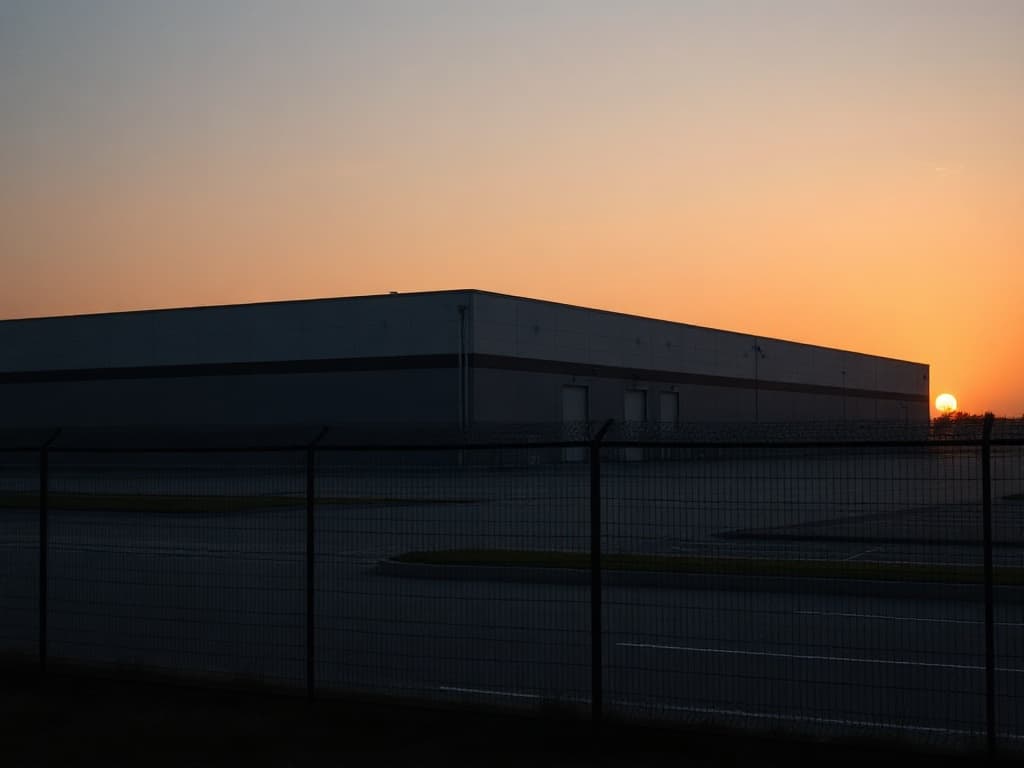
Where large-facility gaps actually open
Four risk surfaces a single-post guard or a drive-through patrol won’t cover.
A single gate guard fits a single building. A drive-through patrol fits multi-property portfolios. Large-facility security is a third posture — one footprint, many gates, many buildings, one coordinated roster. These are the four risk surfaces our customers lose the most sleep to before a single officer clocks in.
Unstaffed gates between dock, yard, and vendor lanes
A campus with two, three, or more entry points has more chokepoints than a single-DC perimeter — and the unattended mid-day gap between vendor check-in and outbound trailer pooling is where unverified drive-throughs lead to after-hours loss events. A coordinated roster assigns each gate to the right sub-post at the right window of the operating calendar.
Visitor flows crossing without a single orchestrated point
Reception signs in one visitor while a partner vendor walks in through the south service gate, a contractor trailer pulls through the yard unbadged, and your team has no shared picture of who crossed which threshold. Lobby + entry-posts coordinated on one roster gives every gate the same credentialing bar and one audit trail when an incident needs reconstruction.
Common-area corridors that span multiple buildings
Internal corridors between production, warehouse, office, and shipping buildings become the gap between posts on a single-building perimeter plan. Without a roving presence that owns those corridors end-to-end, alarm response is delayed by minutes that matter — and insider movement across buildings is invisible to your existing camera stack.
Shift handoffs that drop coverage across the operating calendar
A facility operating 24/7 with a rotating roster is only as strong as its weakest handoff. Drop-and-go shift changes without paid overlap leave the gate uncovered for a window the calendar never acknowledges — and an unfinished shift summary is what makes an alarm event unreconstructible at end-of-day. Superintendent-led paid-overlap handoffs keep every post staffed and every report countersigned.
What we put on-site
Multi-gate standing posts, lobby + visitor coverage, roving corridors, and a flexible event-day posture — the four postures a large campus actually needs.
The same audit trail we built for armed and unarmed warehouse and DC posts — GPS-stamped, time-carded, and downloadable from your dashboard the moment a shift ends. Written for industrial and commercial campuses with multiple gates, yards, and buildings, not retrofitted from a single-DC post plan.
Multi-gate standing posts written to your access map
A uniformed unarmed officer at the gates your operations team flags — typically a front-desk/personnel gate, a primary truck gate, and a vendor / contractor lane. Every post time-carded on the same platform we run for the rest of our licensed posts, so dispatch and your site lead see the same tail of who crossed which threshold at every gate.
Lobby + visitor-flow coverage that actually meets your reception
A lobby officer pairing with reception — vendor credentialing, escort policy execution, visitor badge issuance, and a documented sign-in tail your site lead can replay after the fact. Coverage scales with visitor volume: staffed for the lull hours, layered for the inbound + outbound waves, never a pass-through body on a residential-style post plan.
Roving presence across corridors, yards, and shared spaces
A roving officer covering common-area corridors between buildings, the yards between gates, and the rooftop / service access that sits outside camera coverage. Each sweep GPS-stamped and time-carded against your facility map — every chokepoint gets a checkpoint, not just a loop. Roving tightens around shift-change, lunch windows, and any incident the supervisor escalates.
Venue / event-day posture for production, turnover, and audit windows
Roster adaptability for the days your campus runs different — production changeovers, semi-annual inventory, AHJ walk-throughs, tenant move-ins, weather-event response. Post orders rewritten for that day’s plan rather than stretched ad-hoc from yesterday’s standing roster, with a dedicated coordinator and paid-overlap guards so nothing drops while the calendar runs non-standard.
California Bureau of Security & Investigative Services Private Patrol Operator. In good standing since 2010.
Every gate, corridor, and yard sweep GPS-stamped from the officer’s app, surfaced on your dashboard in real time. Cadence tightens around shift change, lunch windows, and any incident the campus supervisor escalates.
Per-shift roster with paid-overlap handoff logs, gate-by-gate visitor and vendor tail, roving sweep trail, and any incident summary — exportable as a single zipped pack when your operations team or insurer asks for the record.
How the roster actually runs
One superintendent, one roster, paid-overlap handoffs — the daily operating posture for a large facility.
Multiple posts on one footprint aren’t a question of headcount — they’re a question of coordination. The plan below is what makes a 3-gate, 5-building campus actually feel staffed, instead of feeling like four separate posts that happen to share an address.
Coordinated roster across multiple gates, buildings, and yards
One roster, one supervisor, one plan — written against your campus access map rather than assembled gate-by-gate. The roster swaps when windows open and close (vendor arrival, shift change, outbound peak) without leaving any sub-post uncovered in between. Coverage scales to your foot traffic, not to a fixed hourly headcount.
Campus superintendent on rotation owns the day
One BSIS-licensed field supervisor owns each shift — not a remote dispatch-only contact. They run pre-shift briefs, walk the campus with the oncoming roster, sign off handoffs, and respond in person to any incident the officers escalate. Your site lead has one number to call when something needs a real decision, not a voicemail tree.
Paid-overlap shift handoffs — never a drop-and-go gap
Every shift change is a paid 15–30 minute overlap so the outgoing officer walks the incoming officer through the open items — propped gates, vendor still on-site, alarms in test, pending escort. End-of-shift summaries are countersigned before the outgoing officer leaves the property. The audit trail closes cleanly every shift, not at week-end.
Sub-post swap flexibility as the operating calendar changes
When your facility runs a non-standard day — production changeover, semi-annual inventory, AHJ walk-through, tenant move-in, weather event — the same roster re-plans rather than absorbs the work. Sub-post coverage shifts from the gate to the staging area to the corridor in question, with the campus supervisor authorizing the swap in writing rather than improvising on the fly.
California does not regulate guard pricing. The staffing model above is how we cover multi-post campuses in practice — a coordinated roster with paid-overlap handoffs and a superintendent on rotation, sized to the number of gates and the visitor volume at peak windows. Final roster reflects your access map, facility square footage, and the non-standard days the campus calendar actually runs.
Quote · routed to large-facility security
Ready for a large-facility security quote?
The form opens pre-selected to the Unarmed branch — your footprint, gate count, building list, visitor volume, and go-live date route straight to the unarmed / facility team lead at Mission Protection Services, not a generic dispatch inbox. Switch branches in the form if your post is armed, fire-watch, or mobile patrol instead.
What we ask for
Three minutes of filling out, and we know enough to quote: your facility footprint, the gate count that defines the roster, how many buildings and yards the campus map actually contains, your visitor volume at peak windows, and the date you want coverage to start.
- Footprint
- Gate count
- Buildings
- Visitor volume
- Go-live date
Form posts to the unarmed / facility team — same-day reply, usually within an hour during business hours. No phone tree. UTM param utm_source=large-facility-security rides through so dispatch sees which campaign converted; ?service=unarmedkeeps the form’s Unarmed branch selected on first paint and the standing / patrol / lobby / roving post-type picker ready for the right sub-post. Switch in-form if your post is different.